
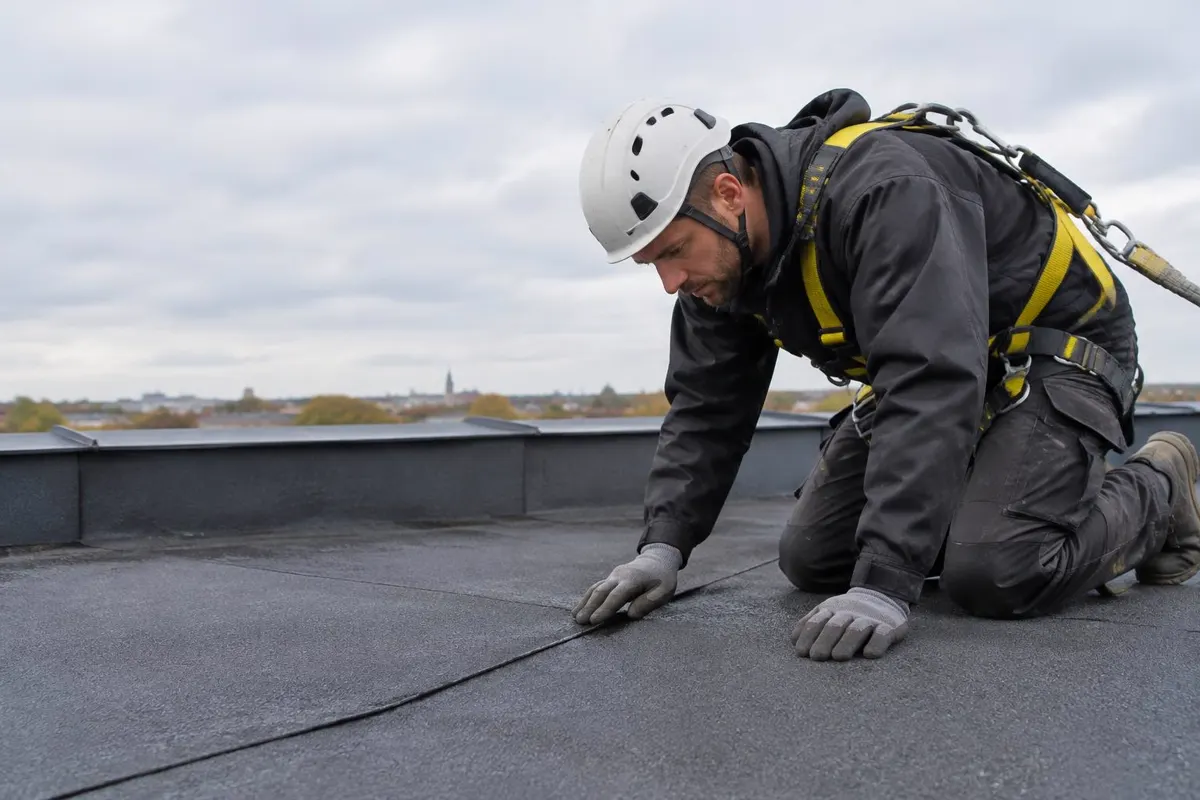

Common types of flat roof damage
Flat roofs are used on houses, apartment buildings, garages, outbuildings and commercial properties.
Although called flat roofs, they usually have a slight slope to allow water to drain away.
Roof coverings are exposed daily to temperature fluctuations, ultraviolet radiation, precipitation and mechanical loads. Various types of damage can develop over time.
Cracks and mechanical damage
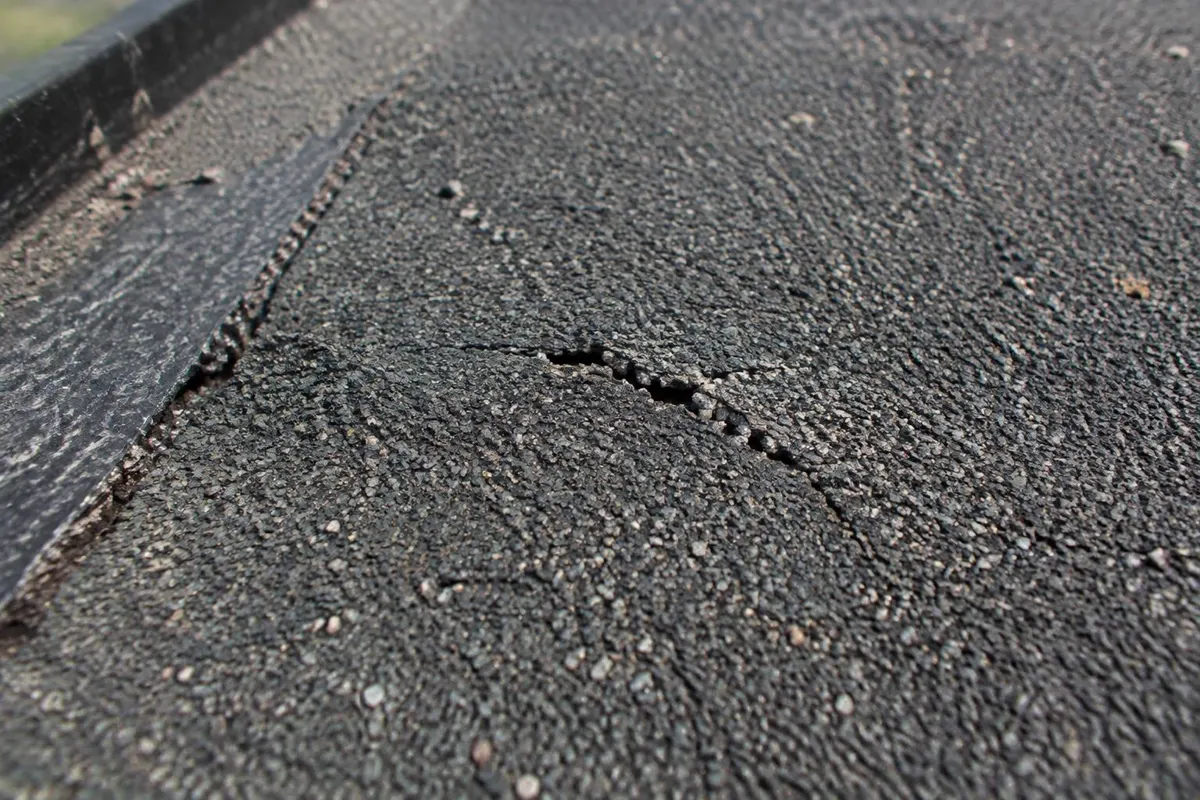
Cracks, cuts or holes can develop in the waterproofing membrane, for example as a result of material ageing, careless foot traffic or work carried out on the roof.
If the damage penetrates the waterproofing layer, water can get beneath the covering.
Detached or damaged seams
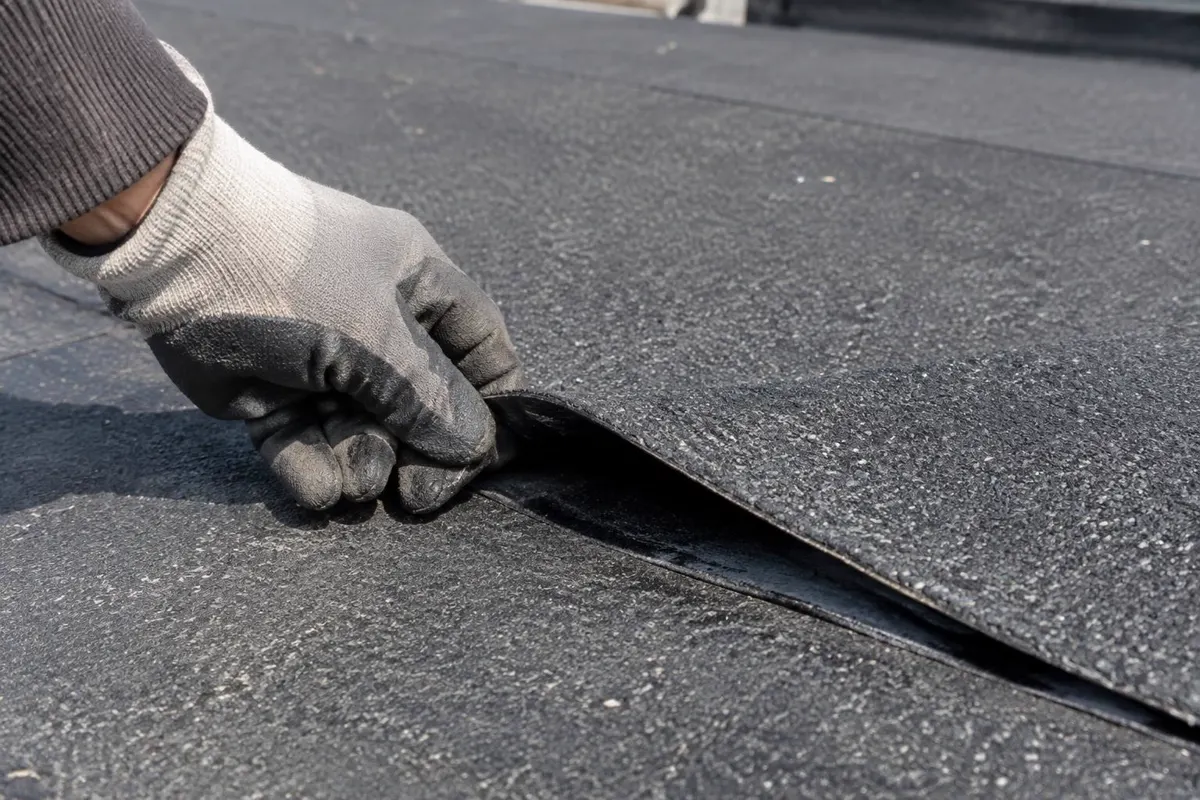
Joints between roof waterproofing materials must provide continuous protection against water ingress.
If a seam loses its watertightness, moisture can penetrate beneath the covering even when the rest of the roof surface appears undamaged.
Blisters and deformation of the covering
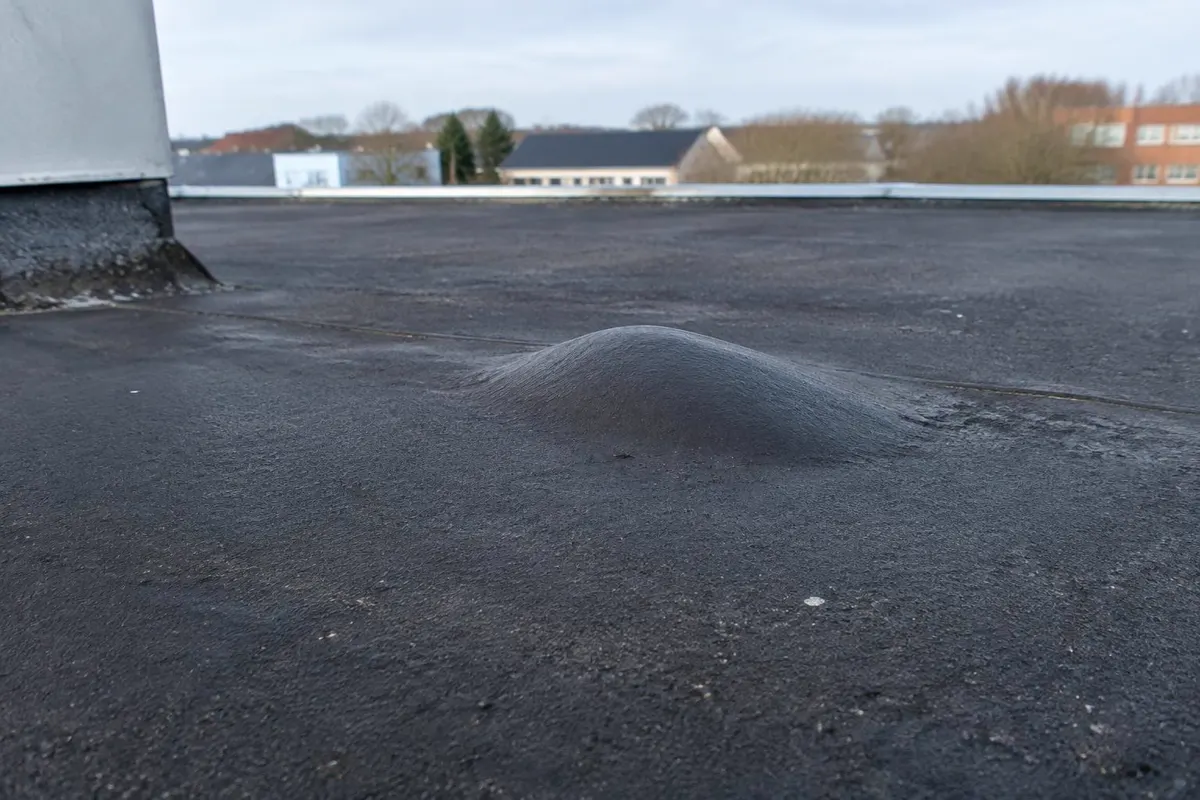
Raised areas or blisters sometimes form on bitumen roof coverings.
These may be associated with moisture or air between the material layers, as well as other factors relating to the covering's build-up and service conditions.
Not every blister automatically means a roof leak, but the cause of the defect needs to be assessed.
Damaged junctions with parapets and walls
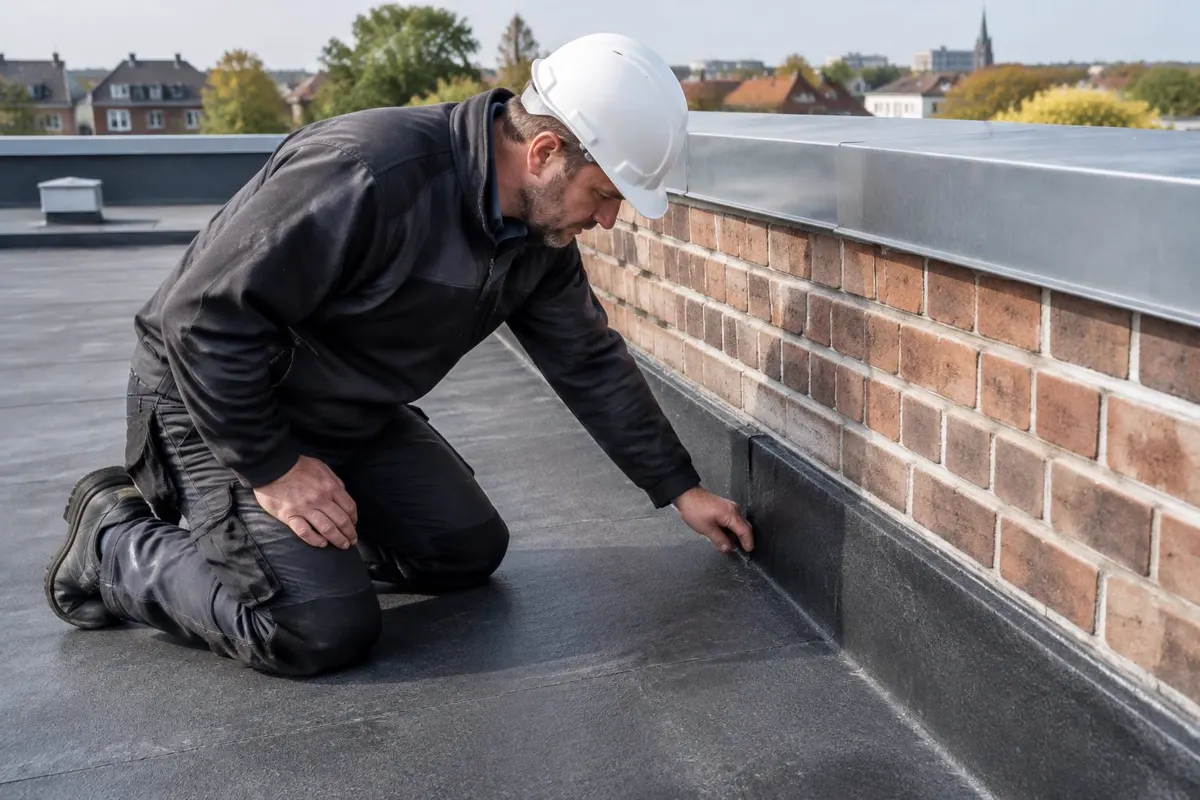
Flat roof junctions with parapets, walls, ventilation outlets and other structures are particularly important waterproofing details.
An incorrectly constructed or damaged junction can allow water into the roof structure.
Water pooling on the roof
If the roof slope or drainage system does not work effectively enough, water can remain on the roof for extended periods.
Pooling water does not necessarily mean the waterproofing is damaged, but it can increase the load on problem areas and indicate that the roof drainage needs checking.
Blocked roof drains
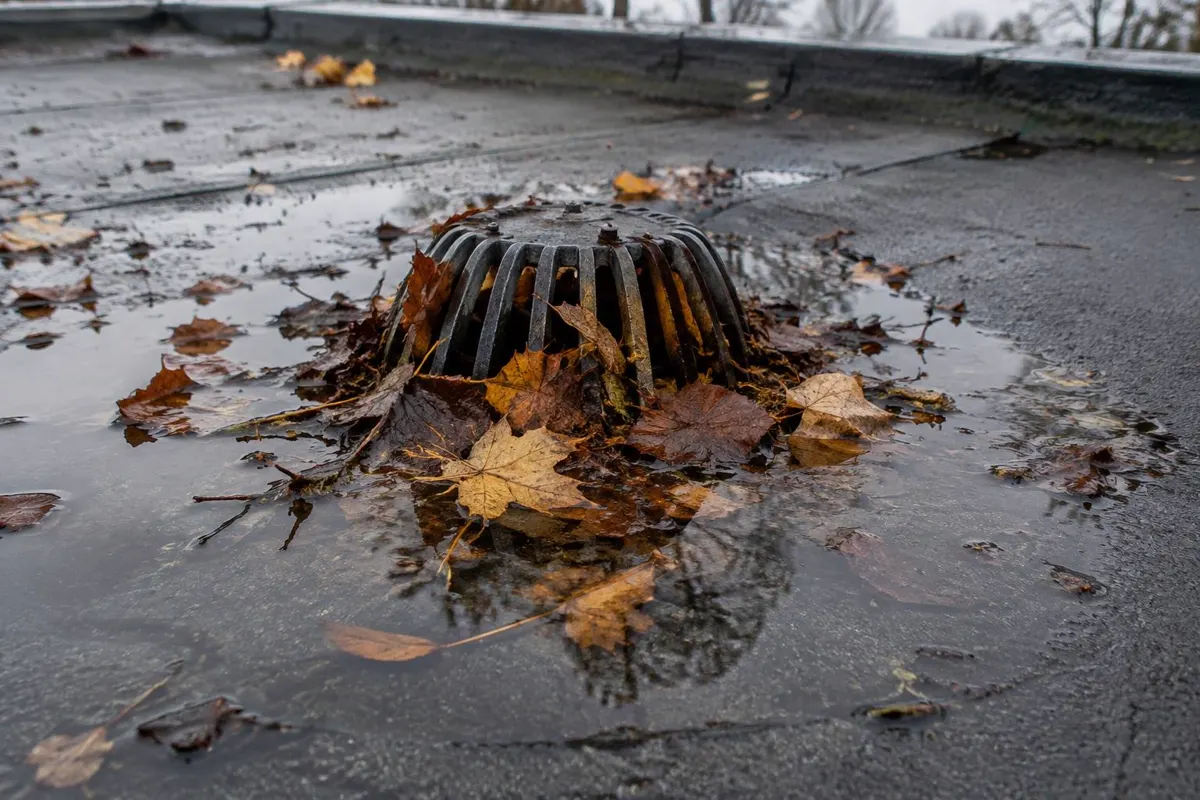
Leaves, dirt and other debris can block roof drainage points.
This can cause water levels on the roof to rise, especially during heavy rain or snowmelt.
Regular drain inspections and cleaning help reduce the risks associated with pooling water.
Flat roof waterproofing repairs
Waterproofing is one of the most important elements of a flat roof. Its purpose is to protect the roof structure and the building's interior from rainwater and meltwater.
The type of repair depends on the roofing material used, the extent of the damage and the condition of the roof structure.
Bitumen roll roofing repairs
Bitumen roll membranes are a widely used waterproofing solution for flat roofs.
Damaged seams, cracks, delamination or mechanical damage can develop over time.
Depending on the condition of the covering, localised repairs, restoration of waterproofing joints or replacement of individual sections of the covering may be considered.
It is important that repair materials are compatible with the existing roof waterproofing system.
Roof seam repairs
A damaged waterproofing seam can become a point of water ingress.
Before repairs, the seam's condition needs to be assessed to determine whether the damage is localised or affects a larger area of the covering.
The appropriate repair method must be chosen according to the existing material and the type of damage.
Waterproofing parapets and junctions
At junctions with parapets, walls, pipes and ventilation outlets, the waterproofing must form a continuous, correctly installed protective barrier.
Repairs in these areas may involve restoring damaged junction components or sections of waterproofing.
Localised roof covering repairs
If only a limited roof area is damaged, localised repairs may be considered.
However, before starting work, it is important to check whether moisture has accumulated beneath the waterproofing and whether the damage affects other roof layers.
If the problem is more extensive, patching a single visible area may not provide a lasting result.
How are flat roof repairs carried out?
1. Describing the problem
Contact us and tell us what problem you have noticed. If possible, send photographs of the roof and the damage.
2. Roof inspection
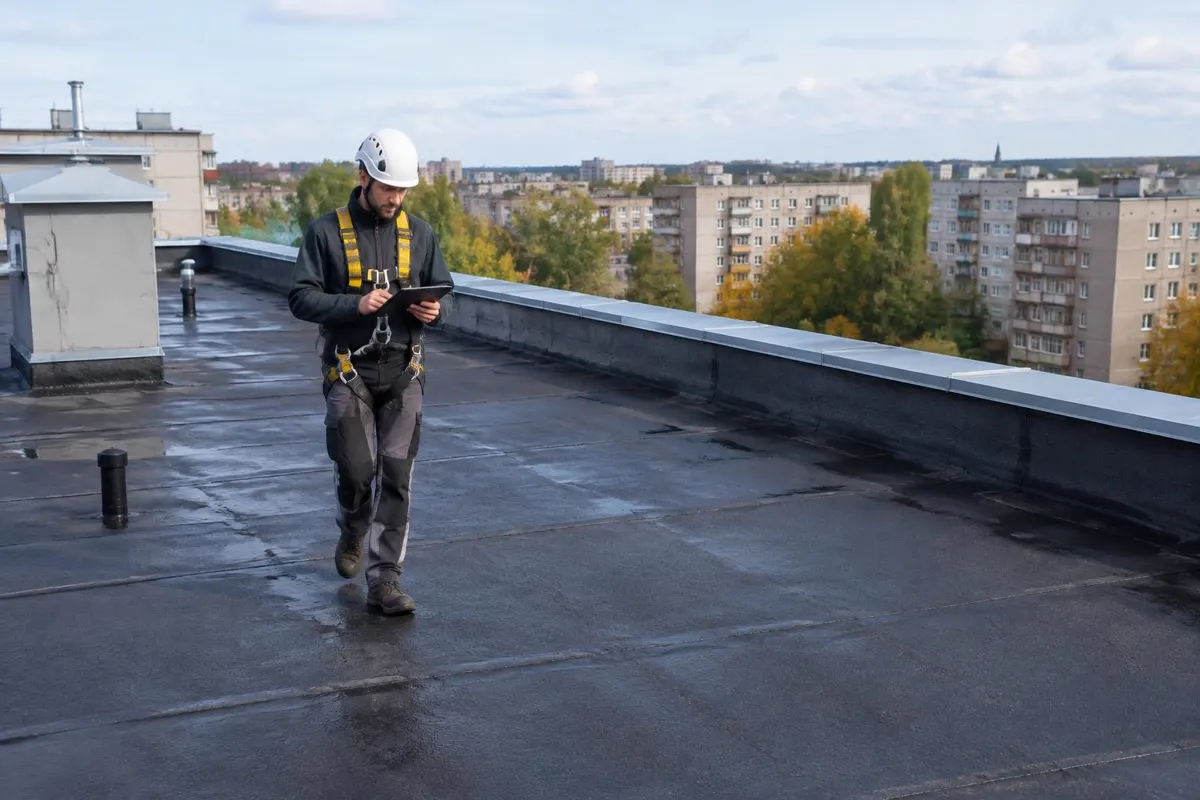
We assess visible waterproofing damage, covering joints, junctions and drainage points. A more detailed investigation of the damage is required where necessary.
3. Choosing a repair solution
Based on the roof's condition, we assess the most appropriate scope of repairs and materials. If the damage is localised, repairs to the specific area may be considered. More extensive damage may require more substantial work.
4. Carrying out the repairs
We carry out the agreed repairs in accordance with the technical requirements of the selected waterproofing system.
5. Checking the completed work
After repairs, we assess the condition of the repaired areas and, where necessary and practicable, carry out an appropriate check.
Can a flat roof be repaired without a complete replacement?
Not every flat roof defect means that the entire waterproofing covering needs replacing.
If the roof structure and most of the waterproofing are in sufficiently good condition, localised repairs can be an economically sound solution.
However, there are situations where repairing individual areas is not enough:
- The waterproofing is extensively worn.
- Damage recurs in several areas.
- Moisture has accumulated beneath the covering.
- Several layers of the roof structure are damaged.
- The existing covering's condition does not allow reliable localised repairs.
In such cases, more extensive roof refurbishment or replacement of the covering needs to be considered.
The most important step is to identify the cause of the problem and choose a solution suited to the roof's actual condition.
Why choose Kārtība Tīrība?
Experience from 400+ roof jobs
We have experience in roof maintenance, cleaning and repairs.
An individual approach
Every property is different. Before repairs, we assess the specific situation and the scope of work required.
Roof repairs and maintenance
We offer a range of roof maintenance services, including repairs and gutter cleaning.
A responsible attitude
We aim to be the best.
We work with a clear conscience.
Frequently asked questions about flat roof repairs
Why is my flat roof leaking?
The most common causes are damaged waterproofing, leaking seams, damaged junctions or problems at drainage points. The precise cause must be established during an inspection.
Can just one damaged area of the roof be repaired?
Sometimes, yes. If the damage is localised and the rest of the covering is in suitable condition, repairs to the specific area may be considered.
Do puddles on a flat roof mean the roof is damaged?
Not always. However, prolonged pooling can indicate problems with the slope or drainage, so having the situation checked is recommended.
Can bitumen roof repairs be carried out in the rain?
Many waterproofing repairs require a dry, properly prepared surface. Whether work can proceed depends on the material, weather conditions and the particular repair method.
When does all the waterproofing on a flat roof need replacing?
More extensive replacement may be necessary if the covering is substantially worn, damage is present in many areas or moisture has affected the roof's structural layers.
Need flat roof repairs?
Is your flat roof leaking, is the waterproofing damaged, or do you need a roof inspection?
Contact Kārtība Tīrība. Send photographs of your roof and a short description of the problem so that we can make an initial assessment.
Experience from 400+ roof jobs
Phone: +371 26006111
Email: info@kartibatiriba.lv
Kārtība Tīrība — clean work and a clear conscience.